
As a fashion designer navigating the fast-paced trends of the US market—from the polished streets of Manhattan to the laid-back coastal vibes of Malibu—I’ve learned one universal truth: clothes are the canvas, but accessories are the art. You can wear the most expensive designer gown or the simplest white tee, but without the right finishing touches, the look remains unfinished. Accessorizing is the strategic bridge between “wearing clothes” and “having style.”
The secret to mastering this craft lies in understanding balance, proportion, and the psychological impact of your choices. Whether you are prepping for a high-stakes boardroom meeting or a casual brunch, your accessories serve as your personal signature. In this guide, we will break down the professional techniques used by stylists to ensure every outfit you put on looks intentional, cohesive, and perfectly curated.
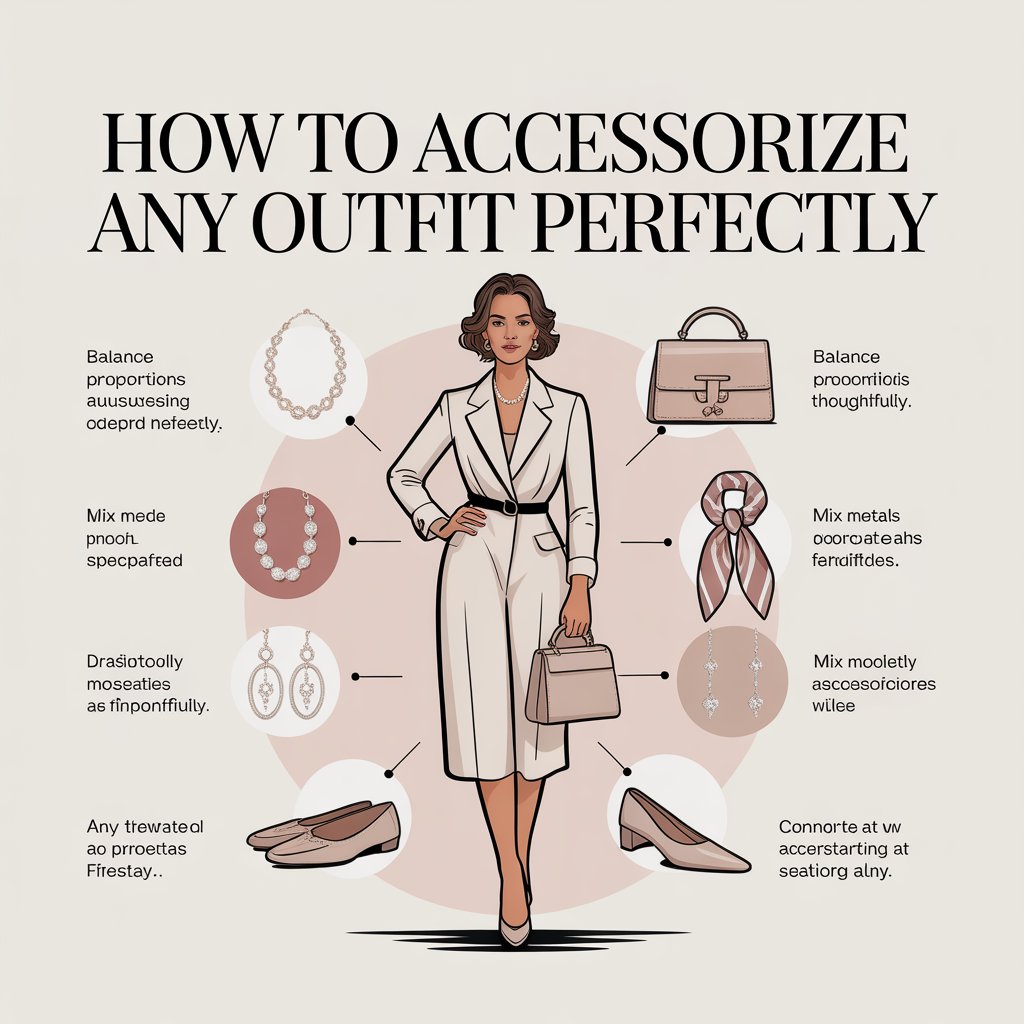
1. Establish a Captivating Focal Point
Every masterpiece needs a center of attention, and your outfit is no different. A common mistake many make is trying to wear every “it” piece at once, which creates visual noise rather than harmony. According to expert styling principles, you should pick one accessory to be the real star and let the rest of your pieces play a supporting role.
If you opt for a bold, chunky statement necklace, keep your earrings minimal—perhaps simple gold studs. Conversely, if you are wearing architectural, shoulder-grazing earrings, you might want to skip the necklace altogether to let your neckline breathe. This “hero piece” strategy ensures that the eye knows exactly where to look, creating a sophisticated silhouette that feels effortless rather than forced.
“Accessories are the exclamation point of a woman’s outfit.” — Michael Kors
2. Master the “Vital V” for Visual Balance
In the world of professional styling, we focus heavily on the “Vital V”—the area from your shoulders down toward your mid-chest. This space is the first thing people notice within the first 30 seconds of meeting you. By dressing this area correctly, you can frame your face, elongate your neck, and even balance your body proportions.
For those with shorter necks, choosing a necklace length of 18–20 inches creates an elongating effect, while those with longer necks can pull off 15–17 inch chokers to create horizontal balance. Utilizing scarves or V-neck tops in conjunction with jewelry doubles the “magic,” drawing the eye upward and highlighting your facial features. This technique is a favorite among personal stylists to boost confidence instantly.
💡 Pro Tip: When in doubt, follow the “Coco Chanel Rule”: Before leaving the house, look in the mirror and take one thing off. It ensures you never cross the line from “styled” to “cluttered.”
3. Play with Color Psychology and Harmony
Color isn’t just a visual choice; it’s a psychological tool. Modern research suggests that the color and style of your accessories can shape how others perceive your professionalism and personality. For instance, warm tones like gold and amber project approachability and energy, while cool tones like silver and emerald suggest calm authority.
When matching your accessories to your outfit, you don’t always need to be “matchy-matchy.” In fact, using complementary colors (those opposite each other on the color wheel) often creates a more high-fashion look. A navy blue jumpsuit paired with a pops of burnt orange in a handbag or silk scarf creates a vibrant, curated aesthetic that shows you understand the nuances of color theory.
Quick Guide: Accessory Color Harmony
| Outfit Color | Best Hardware | Complementary Accent |
|---|---|---|
| Black/Navy | Silver or White Gold | Emerald, Ruby, or Mustard |
| Earth Tones | Gold or Copper | Turquoise, Burnt Orange, or Cream |
| Pastels | Rose Gold | Soft Grey or Deep Plum |
| Pure White | Gold or Silver | Bold Red or Cobalt Blue |
4. Scaling and Proportions for Your Body Type
The scale of your accessories should be in proportion to your body frame and the weight of the fabric you are wearing. A tiny, delicate pendant can get “lost” on a heavy oversized wool sweater, just as a massive tote bag might overwhelm a petite frame in a sleek slip dress. As a designer, I always recommend matching the “heaviness” of the accessory to the “heaviness” of the garment.
If you have a larger frame, you can carry off bolder, more substantial pieces like wide belts and thick cuffs. If you are more petite, opt for finer chains and smaller structured handbags to maintain a balanced silhouette. Remember, the goal is to enhance your natural shape, not hide it behind layers of metal and leather. Matching proportions to your body type is the key to looking polished.
5. Layering: The Secret to Depth and Texture
Layering is how fashion insiders create “richness” in a look. It involves mixing different lengths, textures, and materials to add dimension. This could mean stacking three different gold bracelets of varying thicknesses or wearing two necklaces—one 16-inch chain and one 20-inch pendant. Layering allows you to tell a story and show off your unique personality.
Don’t be afraid to mix textures as well. A leather belt paired with a silk scarf and metal jewelry creates a tactile contrast that is visually stimulating. This technique is particularly effective for transforming “boring” outfits into high-fashion ensembles. By experimenting with different combinations, you move from just being “dressed” to being “styled.”
The Essentials Checklist for Every Closet:
- A Structured Handbag: To add instant authority to any look.
- Signature Timepiece: A classic watch that conveys punctuality and style.
- The “Everyday” Hoop: Gold or silver hoops that work from gym to gala.
- Silk Scarf: Versatile for the neck, hair, or tied to a bag.
- Leather Belt: To cinch the waist and define the silhouette.
6. Accessorizing for the Occasion
Context is everything in fashion. The accessories you choose for a weekend trip to the Catskills should differ significantly from those you wear to a gala in D.C. For professional settings, keep pieces refined and purposeful—think studs, a sleek watch, and a structured tote. These items signal attention to detail without being distracting.
For social and evening events, this is your time to make a statement. Swap the tote for a clutch and the studs for “mood-lifting” chandelier earrings. Travel-friendly accessorizing, on the other hand, focuses on versatility. According to Mvraki, the best travel pieces are those that can serve multiple purposes, such as a pashmina that works as a scarf and a blanket.
“A woman makes an outfit her own with accessories.” — Oscar de la Renta
7. The Final Touch: Footwear and Belts
Shoes are often the most important accessory because they dictate the “line” of your leg. A pointed-toe pump elongates the leg, while an ankle strap can “cut” the line, which works best for longer legs. Meanwhile, belts are the most underutilized tool in the American wardrobe. A belt does more than hold up pants; it creates an hourglass shape and adds a finished look to blazers and dresses.
When choosing shoes and belts, they don’t necessarily have to match in color, but they should match in “vibe.” A rugged leather belt pairs well with boots, while a slim patent leather belt belongs with heels. By focusing on these final details, you ensure that your outfit is cohesive from head to toe.
Regardless of the current trends, the best accessory you can wear is confidence. These rules are designed to give you a foundation, but your personal flair is what makes style come alive. Don’t be afraid to break a rule once you’ve mastered it. Fashion is about evolution, expression, and enjoying the process of creating your visual identity every single day.
