Stop Staring at Your Closet Every Monday Morning
You know the feeling. It’s 7:45 a.m., you have a 9 o’clock meeting with a client, and you’re standing in front of your closet wondering: Do chinos count as business casual? Can I get away with clean white sneakers? Is this blazer too much?
You’re not alone. A LinkedIn survey found that nearly 60% of US professionals say they feel uncertain about dress codes at work — and with hybrid schedules blurring the line between home comfort and boardroom polish, that confusion has never been more real.
Here’s the good news: business casual looks don’t have to be complicated. When done right, smart casual attire is actually one of the most freeing dress codes out there. It sits in that sweet spot between the rigidity of a full suit and the sloppiness of jeans-and-a-hoodie, giving you room to express your personality while still looking like someone who means business.
In 2026, office casual style has evolved with the times — sustainable fabrics, relaxed silhouettes, and quiet luxury aesthetics are reshaping what professional casual wardrobe essentials look like. Whether you’re in a Silicon Valley startup, an NYC agency, or a Chicago consultancy, this guide breaks down everything into foolproof formulas so you can walk into any room — or Zoom call — with total confidence.
What Exactly Is Business Casual in 2026?
Business casual is one of those dress codes that sounds simple until you’re actually standing in a fitting room. To cut through the noise: business casual looks = elevated separates that are polished but not formal. Think structured pieces without a tie, smart without a suit.
In the US, the general consensus looks like this:
- Yes: Collared shirts, blouses, chinos, tailored slacks, loafers, blazers, midi skirts, knit tops
- No: T-shirts with logos, athletic leggings, flip-flops, ripped jeans, hoodies (unstructured)
- Maybe: Dark slim jeans with a blazer, clean minimalist sneakers, dressy joggers with a structured top
That said, work-appropriate fashion varies significantly by industry. What flies in a Palo Alto product meeting might not cut it in a Midtown Manhattan law office.
| Industry | ✅ Do’s | ❌ Don’ts |
|---|---|---|
| Tech / Hybrid | Elevated casual looks: sweater vests, structured joggers, quality tees under blazers | Gym athleisure, wrinkled hoodies, slides |
| Finance / Corporate | Blazers + business casual pants, pressed button-downs, loafers | T-shirts, distressed denim, athletic shoes |
| Creative / Agency | Wide-leg trousers, printed blouses, statement accessories | Anything too casual or sloppy |
| Healthcare / Education | Smart separates, neutral colors, comfortable closed-toe shoes | Overly casual or flashy pieces |
One 2026 trend worth noting: the rise of quiet luxury — understated, high-quality pieces in neutral tones that look expensive without screaming any one brand. Think oatmeal linen trousers, a camel blazer, or a slate-gray knit top. It’s the aesthetic that works equally well on a video call or in the conference room.
Building Your Business Casual Capsule Wardrobe
A well-built capsule wardrobe is the secret weapon behind effortless office casual style. Instead of buying trendy pieces that work for one outfit, invest in 10–12 professional casual wardrobe essentials that mix and match endlessly.
The Core Pieces (Gender-Neutral and Inclusive)
Tops:
- Tailored button-down shirt in white, light blue, or soft stripe — the cornerstone of any business casual outfit. Look for breathable cotton-blend at J.Crew ($60–80) or Amazon Essentials ($25–35).
- Structured knit top or ribbed polo — a 2026 staple that bridges smart casual attire and comfort. Great for Zoom calls and in-person days alike.
- Silk or satin blouse (women’s) — instantly elevates any outfit. Target’s A New Day line offers options under $35 that photograph beautifully.
- Fitted crew-neck sweater or sweater vest — layer over a button-down for an elevated casual look that works year-round.
Bottoms:
- Tailored chinos in khaki, navy, or olive — the most versatile business casual pants in any wardrobe. Banana Republic and Nordstrom Rack carry excellent options in extended sizes ($40–90).
- Wide-leg trousers — the 2026 silhouette of choice. Flattering on all body types and comfortable enough for long hybrid workdays.
- Midi skirt (A-line or wrap style) — pairs with blouses, blazers, and fitted knits for an endlessly polished look.
- Dark straight-leg jeans (if your workplace allows) — stick to indigo or black, zero distressing, always paired with a structured top.
Outerwear and Layering:
- Neutral blazer — your single most powerful business casual piece. A camel, navy, or charcoal blazer transforms any outfit instantly. Amazon’s The Drop and Nordstrom both offer excellent options from $50–150.
- Long cardigan or duster coat — a softer alternative to the blazer, great for creative industries or casual Fridays.
Footwear:
- Leather or faux-leather loafers — the ultimate business casual shoes for office settings. Penny loafers in black or tan work for all genders.
- Ballet flats or block-heel mules (women’s) — comfortable and polished for long days.
- Clean minimalist leather sneakers — white or neutral tones, no athletic branding, for tech-adjacent or hybrid environments.
Business casual for women in 2026 leans into fluid, feminine silhouettes — flowy blouses, wide-leg pants, and midi lengths — balanced with structured blazers and quality footwear. For plus-size options, brands like Universal Standard, Eloquii, and ASOS Curve offer excellent professional pieces that don’t compromise on style.
Outfit Formulas for Every Day and Occasion
The real magic of business casual looks comes from having go-to formulas you can build in minutes. Here are 7 mix-and-match combos for every workplace scenario.
1. The Monday Power Look (Men’s)
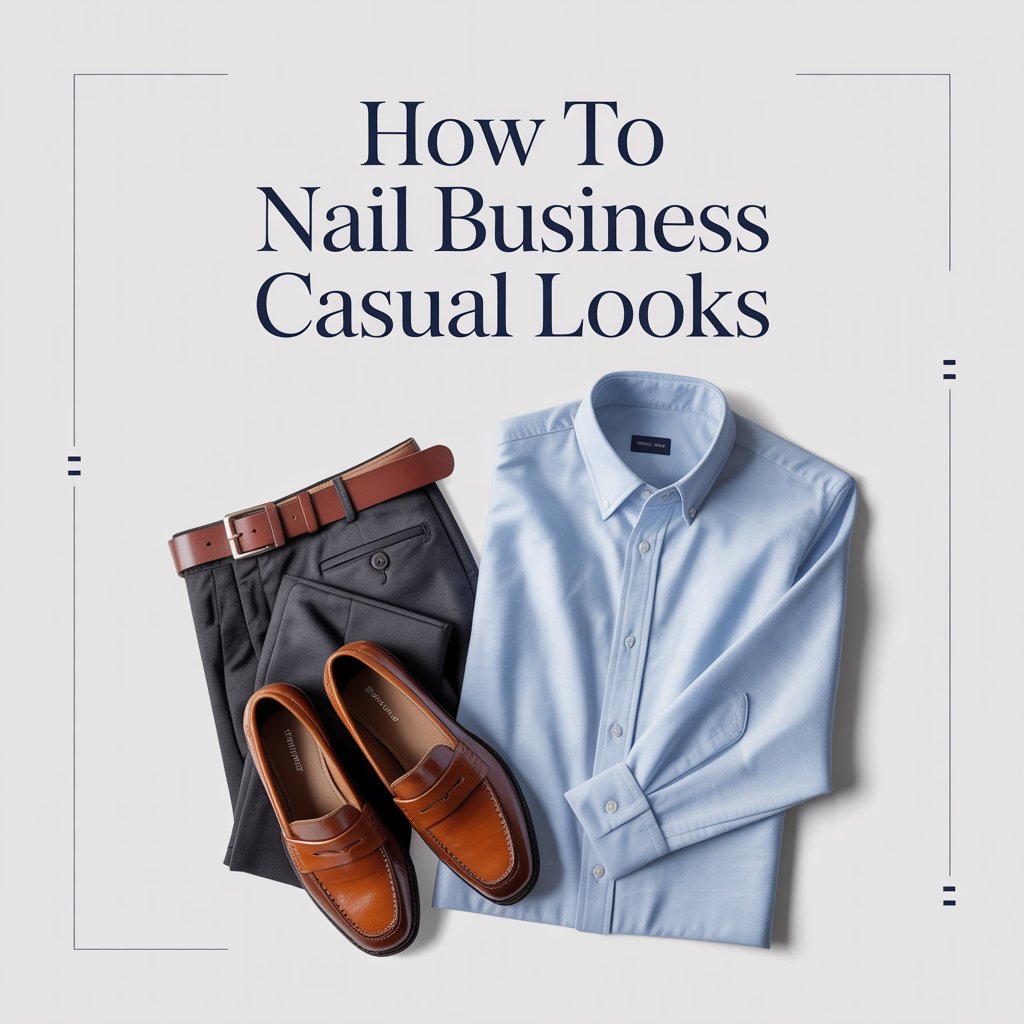
Men’s business casual pants (tailored navy chinos) + crisp white oxford shirt + cognac leather loafers + minimal watch. Optional: camel blazer if there’s a morning meeting. This outfit reads confident without trying too hard.
2. Women’s Client Meeting
Midi wrap skirt in a muted print + tucked silk blouse in ivory or blush + block-heel mules (the business casual shoes for office meetings). Add a structured tote and minimal gold jewelry. Clean, authoritative, elegant.
3. Hybrid Work / Zoom-Ready
This is where hybrid work outfits shine. Pair a fitted ribbed turtleneck (camera-friendly — no loud patterns) with tailored trousers. Your bottom half can be comfortable; your top half does the professional heavy lifting. Keep the background clean and light source front-facing.
4. Creative Industry Friday
Wide-leg linen trousers in a neutral + a fitted graphic-print blouse + white leather loafers. Add a statement earring. This is elevated casual — expressive but still work-appropriate fashion.
5. The Smart Layered Look (Fall / All Genders)
Crew-neck sweater over a collared shirt (let the collar peek out) + slim chinos + dark loafers. Simple, polished, and endlessly professional. Works equally well in Chicago in October or NYC in November.
6. Business Casual on a Budget
Amazon Essentials button-down ($25) + Target-brand trousers ($35) + thrifted leather loafers. The formula matters more than the price tag. Keep everything pressed and fitted, and nobody will know what you spent.
7. The Power Blazer Outfit
Blazer over a simple white tee (yes, this works in semi-formal workwear settings) + tailored black trousers + clean white leather sneakers. This is the quiet luxury formula — effortless, intentional, polished.
Seasonal Business Casual Tips
One of the trickiest parts of dressing for the office is adapting to US climate extremes — from sticky August in Atlanta to frigid February in Minneapolis. Here are seasonal business casual tips that keep you comfortable and polished year-round.
Spring / Summer
- Reach for linen and breathable cotton. Linen shirts and lightweight chinos are 2026 must-haves — they look sharp and survive the commute without turning into a wrinkled mess.
- Opt for lighter colorways: Soft sage, sand, dusty blue, and cream all read professional and season-appropriate.
- For women: A sleeveless blouse under a lightweight blazer handles air-conditioned offices while keeping you cool outside.
- Footwear tip: Swap heavy loafers for suede mules or lightweight slip-ons in warmer months.
Fall / Winter
- Layering is your best friend. A turtleneck under a blazer is one of the sharpest semi-formal workwear combinations you can build.
- Invest in a wool or wool-blend trouser. It drapes better, stays warmer, and holds a press beautifully.
- For rainy commutes (hello, NYC): Keep a compact umbrella and a water-resistant outer layer (a structured trench coat is perfect) separate from your outfit. Never sacrifice style because of weather — just plan around it.
- Color shift: Transition into burgundy, forest green, camel, and charcoal. These earth tones are all over Nordstrom’s fall business casual reports and work perfectly with the quiet luxury trend.
Styling Hacks for Every Body Type — and Common Mistakes to Avoid
Business casual looks best when they’re fitted — not tight, not baggy, just right. Here’s how to nail the proportions for your frame:
Petite frames: Opt for cropped blazers and high-waisted trousers that visually lengthen the leg. Avoid oversized pieces that overwhelm your silhouette. Monochromatic outfits (matching top and bottom tones) also create a longer line.
Curvy / Plus-size frames: Wrap styles (skirts, blouses, dresses) are universally flattering. Structured blazers define the waist. Wide-leg trousers balance the hip beautifully. Avoid boxy, shapeless cuts that add bulk.
Tall frames: You can carry wider silhouettes and bold proportions. Wide-leg trousers and longline blazers look exceptional. Make sure hems are long enough — “business casual pants” that hit mid-calf on a tall frame read as capris, not trousers.
Common Business Casual Mistakes (and Fast Fixes)
- Too sloppy: If the polished everyday style isn’t landing, the culprit is almost always fit. Take key pieces to a tailor — hemming trousers costs $15 and makes a $40 pair look like $150.
- Too stiff / overdressed: Ditch the full suit when the dress code says business casual. Swap the suit jacket for a blazer, add a softer fabric, and lose the tie.
- Tuck or don’t tuck? As a rule: tuck in shirts for definition and polish. A half-tuck works for more casual Fridays. Never fully untucked unless it’s a clearly oversized piece designed that way.
- Shoes letting the outfit down: Your footwear either makes or breaks the look. Even a perfect outfit reads sloppy with scuffed, worn-out shoes. Keep them clean, polished, and seasonally appropriate.
- Ignoring wrinkles: A wrinkled shirt signals carelessness more than any individual clothing choice. A handheld steamer ($25–40 on Amazon) is one of the best investments a professional can make.
Accessorizing and Grooming to Elevate Your Look
The difference between a good business casual outfit and a great one often comes down to the finishing touches.
Accessories that work:
- A classic watch (analog, leather or metal band) — timeless and professional for all genders
- Minimalist stud earrings or a simple pendant necklace for women
- A structured leather bag or portfolio — elevates any semi-formal workwear ensemble
- A leather belt that matches your shoe color
What to skip: Heavy statement jewelry, baseball caps, visible logo-heavy accessories, or anything too casual or costume-y for the setting.
Grooming basics:
- Neat, intentional hair — whether that’s a clean blowout, a fresh fade, or a tidy bun
- Subtle, polished makeup if you wear it — think “awake and put-together,” not “going out”
- Clean, trimmed nails
- Clothes that are freshly laundered and wrinkle-free every time
These details signal that you take your professional presence seriously — and research consistently shows that people who dress intentionally are perceived as more competent and confident, regardless of role or level.
Conclusion: One Outfit at a Time
Mastering business casual looks isn’t about having a closet full of expensive clothes. It’s about knowing your formula, investing in versatile essentials, and showing up consistently polished.
Here’s your quick-start checklist:
- Build your foundation: A blazer, tailored trousers, button-downs, and quality shoes
- Use the outfit formulas above as your Monday-through-Friday blueprint
- Adapt by season — linen in summer, wool layers in winter
- Fit first, always — tailor what you have before buying anything new
This week, pick one outfit from the formulas above and wear it with full confidence. Notice how you feel — and how people respond. Style is a form of communication, and business casual done right says exactly what you want it to: I’m here, I’m prepared, and I mean business.
